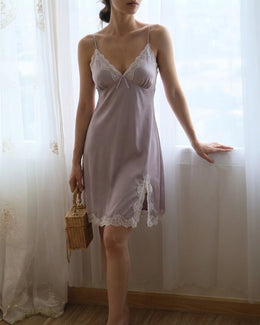



Silk sleeps cooler in summer, warmer in winter, and is measurably gentler on hair and skin; cotton is easier to own — machine-washable, cheaper, harder to ruin. If you sleep hot, wake with creased cheeks, or fight frizz every morning, silk earns its price in weeks. If your sleepwear lives in the weekly hot wash, stay with cotton and enjoy it. The details decide the rest.
Temperature: the thermostat argument
Silk fibre is a protein filament that traps a thin layer of air against the skin — insulating when the room is cold, while its low absorbency lets heat and moisture move away when the room is warm. Cotton is the opposite personality: it absorbs generously (up to a quarter of its weight in moisture) and holds it, which feels crisp and dry at 11pm and clammy at 3am if you run hot. Night-sweat sleepers usually assume they need "more breathable" and buy thinner cotton; what they need is less moisture retention, which is the silk column. (Full breakdown for hot sleepers in our guide.)
Skin and hair: where silk stops being a luxury cliché
Two mechanical facts, no marketing. Friction: silk's surface drags less against skin and hair, which is why sleep creases fade faster and blowouts survive the night — the same reason we make the pillowcase case separately. Absorbency: cotton wicks moisture — including the moisturiser you applied at 10pm and your hair's natural oils. Silk takes far less. None of this reverses time; it just stops your sleepwear from working against your skincare.
The honest comparison table
| Mulberry silk | Cotton | |
|---|---|---|
| Hot sleepers | Cooler through the night | Crisp at first, holds sweat |
| Skin/hair friction | Low — fewer creases, less frizz | Moderate |
| Washing | Hand wash or silk cycle, cold, flat dry | Machine, warm, tumble — indestructible |
| Lifespan with care | Years, kept out of the dryer | Years, no conditions attached |
| Feel on skin | Fluid, cool, weightless | Soft, dry, familiar |
| Price | Higher — fibre cost is real | Accessible |
How to buy silk that's worth it (and spot cotton that's better)
For silk, two numbers do the vetting: mulberry silk (the long-fibre cultivated kind) and momme weight — 19 momme is the sweet spot for sleepwear, heavy enough to drape and survive wear, light enough to stay cool. Below 16 momme, a set is a negligée with a silk label; the full scale is in our momme guide. Our silk pieces are 19-momme mulberry, because that's the weight we'd buy ourselves. For cotton, look for long-staple (Pima, Supima, Egyptian) in a smooth weave — long-staple cotton pills less and softens with every wash instead of roughening. A $30 long-staple cotton set beats a $60 mystery-silk one, every time.
FAQ
Is silk or cotton better for night sweats?
Silk. Cotton absorbs sweat and holds it against you; silk lets moisture and heat pass through. If sweats are heavy, moisture-wicking bamboo or lyocell is a practical third option.
Does silk sleepwear really help your hair?
It reduces friction and moisture loss — less frizz, fewer tangles, longer-lived blowouts. It won't repair damage; it stops adding to it.
Is silk sleepwear hard to care for?
It asks for one habit change: cold hand wash or silk cycle in a mesh bag, no dryer, flat dry out of the sun. Twenty minutes of hands-off care per week, in exchange for how it feels every night. Full routine here.
What momme weight should sleepwear be?
19 momme is the standard worth paying for — durable, opaque enough, still weightless. 22 momme feels more substantial and costs accordingly. Under 16, keep your expectations at negligée level.