


A centre bow sewn to the gore is nearly always decorative and safe to remove. A bow that anchors strap elastic, hides a seam join or sits over a boning channel is structural, and cutting it leaves a raw edge that rubs. The test is what happens to the fabric underneath when the bow is gone.
This comes up constantly and is rarely answered properly. People want to keep the bra and lose the bow — because it prints through a t-shirt, because it scratches, or simply because they do not want it. Most of the time you can. Here is how to tell before you reach for the scissors.
Three Categories of Trim
| Type | How to identify it | Safe to remove? |
|---|---|---|
| Purely decorative | Sits on top of finished fabric; the fabric underneath is intact and hemmed | Yes — unpick, do not cut |
| Concealing | Sits exactly where two pieces meet, or where elastic ends | No — removing it exposes a raw join |
| Structural | Strap or elastic passes through or under it; sits over a boning channel | No — it is carrying load |
The single most reliable check: pull the bow gently away from the garment and look at what is behind it. If you see a clean finished surface, it is decoration. If you see a seam, a raw edge, a bar tack or the end of an elastic, it is doing a job.
How to Remove One Without Damage
Unpick, never cut. Use a seam ripper on the thread holding the bow, not scissors on the bow itself. Cutting leaves a stub and often nicks the base fabric — the most common way a five-minute job becomes a ruined bra.
Work from the back where you can. The stitching that holds a centre bow is usually visible on the inside of the gore as a small tack. Two or three threads, and it lifts away.
Expect small holes. Fine mesh and tulle hold needle marks. On most fabrics they close after a wash and a stretch. On tightly woven silk they may not, so test on the least visible tack first.
Stop if you find bar tacks. A dense block of stitching is a structural anchor, not a decorative one. Manufacturers do not bar-tack a bow that is only there to look pretty.
What Is Load-Bearing on Our Own Pieces
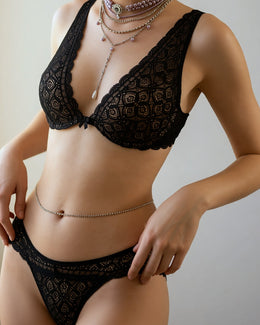
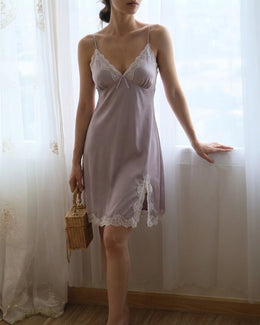
Since the answer depends on the garment, here is how ours are put together. On the After Hours Bustier Set, the velvet-covered boning that runs cup to waist is what makes the piece stand on its own — anything sitting over a boning channel is structural, and removing it exposes the channel edge to your skin. On the Bare Minimum Silk Set there is nothing to remove: no wire, no lining, no padding, so the lace and the silk are the garment rather than a surface applied to it. That is the pattern to look for generally — the less construction a piece has, the more likely any trim on it is doing structural work, because there is nothing else holding the shape. On heavily built pieces, trim is usually decoration sitting on top of a finished surface. It is the opposite of what most people assume.
The Cases Where the Answer Is No
A bow at the centre gore of a wired bra is usually decorative, but on some constructions it covers the point where the two wire channels meet. Check behind it first.
Bows at the strap-cup junction almost always sit over the join where the strap elastic is sewn into the cup. That tack is carrying the full lifting load of the strap.
Bows on the back band near the hooks may be hiding where the elastic is folded and secured. Removing one exposes a fold that will roll.
Lace appliqué over a seam is not trim at all. It is a finishing technique used instead of a bound edge, and there is no finished fabric under it.
Alternatives to Cutting
If it turns out the trim is structural, you still have options. Tuck a small bow behind the gore fabric and tack it flat with two stitches — it stops printing through clothing without being removed. Turn a bow inside out so the satin faces the fabric rather than your skin, which resolves most scratching. Or, if the piece has a sister style, check whether the same set exists in a plainer version; ranges that offer both, like the plainer pieces in the sets, are usually the same block with different surface treatment.
One last note on care: whatever you remove or leave, hand-washing is what protects the trim that stays. Satin bows crush and lose their finish in a machine drum long before the lace does — the method is in how to wash lace lingerie. And if the reason you want the trim gone is scratching rather than looks, choosing lace that does not itch solves it at the buying stage instead.
FAQ
Can you cut the bow off a bra?
Usually yes, if the bow sits on top of finished fabric — but unpick the holding threads with a seam ripper rather than cutting. Cutting leaves a stub and risks nicking the fabric underneath. Check behind the bow first: a seam, a raw edge or a bar tack means it is structural.
How do you tell if lingerie trim is decorative or structural?
Pull it gently away from the garment and look underneath. Clean finished fabric means decorative. A visible seam join, the end of an elastic, a bar tack or a boning channel means it is doing a job and should stay.
Will removing a bow leave a hole?
Small needle marks, usually. On mesh, tulle and most knits they close after a wash and a gentle stretch. On tightly woven silk they can stay visible, so unpick the least conspicuous tack first and see how the fabric recovers before continuing.
Can you remove padding from a bra instead?
Removable pads sit in an open pocket and lift straight out. Sewn-in foam is part of the cup structure and cutting it out collapses the shape entirely. If a listing does not say the pads are removable, assume they are not.
What if the bow is scratching rather than showing?
Turn it so the satin faces the fabric rather than your skin, or tack it flat with two stitches. Both fix the irritation without removing anything, which matters if the bow turns out to be covering a seam.