


Lace That Doesn't Itch: How to Choose It
Lace itches when it's made from stiff fibers with unfinished edges and no lining against the skin. Comfortable lace is soft stretch lace with a smooth finish — and the most comfort-forward styles add a lined cup and a cotton gusset so the lace never sits raw against sensitive areas. So no, you don't have to choose between pretty and bearable. You get to have both.
Here's the thing nobody tells you: the itch isn't the lace's fault for being lace. It's a few specific design choices, and once you know them, you can spot soft lace in three seconds flat. Let's walk through it.
Why does lace feel scratchy in the first place?
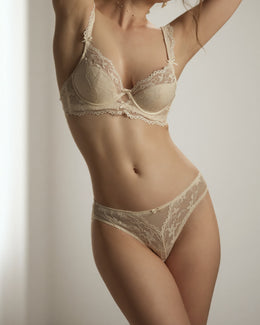
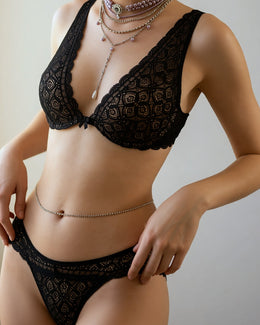
It comes down to four things, and you can check all of them before you ever put a bra on. The fiber decides how soft each thread feels. The edge decides whether a stiff, finished trim saws at your skin all day. The lining decides whether lace touches your cup-area skin at all. And the elastic decides whether the band grips or settles. Stiff nylon with a hard scalloped edge and zero lining is the classic offender — it looks gorgeous on the hanger and turns into a faint, all-day scrape by lunch. Soft stretch lace with a smooth finish does the opposite: it moves with you and forgets it's there. The cups on Capucine and Adele are lined for exactly this reason, so the lace stays on the outside where it belongs.
What's the difference between scratchy lace and comfortable lace?
| Element | Scratchy lace | Comfortable lace |
|---|---|---|
| Fiber | Stiff, dense thread that holds a sharp shape | Soft stretch lace that gives and springs back |
| Edge | Hard, unfinished trim that catches on skin | Smooth finish that lies flat against you |
| Lining | None — raw lace sits straight on the nipple area | Lined cup, so lace never touches the most sensitive skin |
| Elastic | Tight band that digs and leaves marks | Settled band with a soft-wire lift that holds without biting |
Read that table once and you'll never buy blind again. The two columns aren't about price or how the bra photographs — they're about how it treats you at hour eight.
What's the most comfortable lace for sensitive skin?
Look for three things stacked together: soft stretch lace, a lined cup, and a cotton gusset on the matching bottoms. The lace handles the look. The lined cup keeps raw trim off the area that reacts fastest. The cotton gusset gives your most sensitive skin a breathable, natural layer instead of synthetic lace pressed against it all day. Add a soft-wire — a flexible, bendable wire that lifts without digging — and you've got a set that holds you up without a single pressure point. That's the whole formula. Amélie was built around it, and so is most of our sets collection. Sensitive skin doesn't mean you're stuck in seamless cotton forever. It means you read the label and choose smarter.
Does a lined cup really make a difference?
It makes the biggest difference of all. The skin around the cup is some of the most reactive on your body, and that's exactly where bare lace tends to sit. A lined cup puts a smooth, soft layer between the lace and you, so the pretty part stays visible and the scratchy part never touches down. You still get the texture, the pattern, the whole look. You just don't get the all-day reminder that it's there. If you've written off lace because one unlined bra drove you up the wall, try a lined one before you give up. It's a different garment.
How do I wear lace if my skin reacts to everything?
Start with a lined-cup set, wash it once before the first wear, and pick your size honestly — a band that's too tight turns any fabric into a problem, lace included. Check our fit guide if you're between sizes. Give a new set a relaxed evening at home before a long day out, so you learn how it settles on you. And let yourself enjoy the trying — wear it for the mirror, not for him. A small dare is still a dare. Choosing lace that loves your skin back is the easiest one to start with.
FAQ
Why does my lace bra itch? Most itch comes from stiff fibers, a hard unfinished edge, or bare lace sitting directly on sensitive skin with no lining. A too-tight band makes it worse. Switch to soft stretch lace with a smooth finish and a lined cup, and the scratch usually disappears entirely.
Is all lace scratchy? No. Scratchiness comes from stiff thread and raw edges, not from lace itself. Soft stretch lace with a smooth finish feels gentle, and a lined cup keeps it off your most reactive skin. The look stays the same — only the feel changes.
What's the most comfortable lace for sensitive skin? Soft stretch lace with a smooth finish, a lined cup so lace never touches the nipple area, and a cotton gusset on the matching bottoms. Add a soft-wire for lift without digging. Those four together make lace that sensitive skin can wear all day.
Does a lined cup help? Yes, more than any other single feature. The skin around the cup reacts fastest, and a lined cup puts a smooth layer between you and the lace there. You keep the pattern and texture on the outside, with nothing raw pressing against the most sensitive area.
How do I stop a new lace bra from irritating my skin? Wash it once before wearing, choose your size honestly so the band doesn't grip, and break it in during a calm evening at home. Pick a lined-cup style with a soft-wire. If irritation lingers after all that, the fit is likely off, not the fabric.