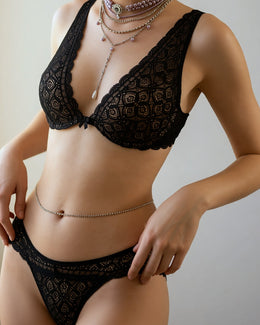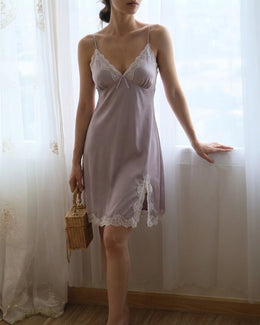



Moulded, padded, unlined and seamed describe how a cup is built, not how much it adds. Moulded cups are heat-shaped into a fixed dome. Padded cups add a layer on top of that. Unlined cups are a single layer of fabric. Seamed cups build shape from panels stitched together.
These four words appear on almost every bra listing and are used interchangeably by shops that should know better. They are not interchangeable, and confusing them is why a bra that fitted in the fitting room feels wrong at home. The construction determines how the cup responds to your shape — whether it imposes a shape or follows one.
The Four, Precisely
| Construction | What it is | Shape it gives | Suits |
|---|---|---|---|
| Moulded | Fabric heat-formed over a mould into a fixed cup | Smooth, round, identical on both sides | Anyone wanting invisibility under fitted clothing |
| Padded | A moulded or seamed cup with added foam or fibrefill | Rounder, with added volume | Coverage of the nipple, or added projection |
| Unlined | A single layer of fabric, often lace or mesh | Follows your shape rather than setting one | Anyone who wants their own shape, and warm sleepers |
| Seamed | Two, three or four panels stitched into a cup | More lift and a more conical, forward shape | Fuller busts, because seams take load that foam cannot |
Two clarifications that fix most confusion. Unlined does not mean unsupportive — a well-seamed unlined cup can support more than a moulded one, because support comes from the frame and the seams, not from the padding. And lined is not padded: a lining is a second sheer layer added for opacity or to keep lace off the skin, and adds no volume at all.
Why the Same Brand Uses Two Sizing Systems
Look at any lingerie range and you will notice some pieces sized 32B to 38C and others sized S to XL. That is not laziness. It is the construction telling you what it can do.
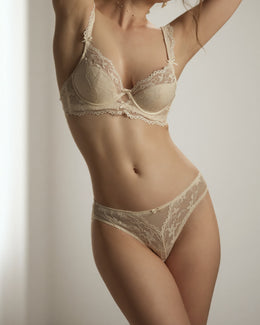
A cup with a fixed built shape — moulded, seamed, wired — has to be made in cup sizes, because the shape is decided in the factory and either matches you or does not. A cup with no fixed shape can be graded in S to XL, because the fabric does the adapting. In our own range the split falls exactly along that line. The Confidante Lace Set runs 32A to 40D because the cups are structured. The Bare Minimum Silk Set runs S to XL, and its page says why: no wire, no lining, no padding — mulberry silk and French lace, with the triangle cup wrapping double so it stays put when you reach. Both are honest choices. What is not honest is a structured bra sold only in S to XL, because someone has decided a single cup shape will do for four band sizes.
Where Boning Fits In
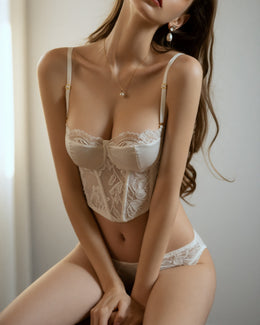
Boning is a fifth element people meet mostly in bustiers and often mistake for stiffness. Fine flexible boning running vertically through the body does not shape the cup — it stops the garment collapsing between the cups and at the waist, which is what lets a piece stay up without gripping. On our After Hours Bustier Set, velvet-covered boning runs from cup to waist so the whole piece stands on its own; the velvet covering exists so the channel does not print through the silk or press a line into skin.
If a bustier feels rigid, the problem is almost always the fit at the underbust rather than the boning itself. Bones that sit correctly are barely perceptible.
Matching Construction to a Problem
Cups wrinkle or gap at the top: you are in a moulded cup that is a fixed shape your breast does not fill. An unlined or seamed cup will follow you instead.
Cup edge shows under a t-shirt: that is a seamed cup doing what seamed cups do. Moulded is the answer if invisibility matters most.
Not enough lift, and adding padding did not help: lift comes from seams and the frame, not from foam. Look for a three-panel seamed cup.
Itching along the cup edge: unlined lace against skin. A lined cup — remembering that lined is not padded — fixes it without changing your shape. More on that in choosing lace that does not itch.
You are between cup sizes: unlined and soft cups are far more forgiving of that than moulded ones, which is worth knowing before you order two sizes and return one.
The Words to Distrust
"Lightly lined" can mean anything from a sheer second layer to a 5 mm foam cup. "Contour" usually means moulded. "Demi" describes coverage, not construction, and can be moulded, seamed or unlined. When a listing gives coverage words but no construction word, assume moulded, because it is the cheapest cup to produce at scale.
Coverage and cup shape are a separate axis worth reading alongside this — see demi versus full cup styles, or start from the fit problem itself in why doesn't my bra fit. The full range is in the sets.
FAQ
What is the difference between a lined and a padded bra?
A lining is a second sheer layer added for opacity or to keep lace off your skin, and it adds no volume. Padding is foam or fibrefill that adds shape and projection. A lined bra keeps your own shape. A padded one changes it.
Are unlined bras supportive?
They can be. Support comes from the band, the frame and the cup seams, not from padding. A well-seamed unlined cup often supports a fuller bust better than a moulded cup does, because seams direct load while foam only fills space.
What does a moulded cup mean?
The fabric has been heat-formed over a mould into a fixed dome shape. It is smooth, identical on both sides, and invisible under fitted clothing. The trade-off is that the shape is decided before you wear it, so it gaps if your shape does not match the mould.
Why are some bras sized S to XL and others 34C?
Because cups with a built shape have to be made in cup sizes to fit, while soft, unstructured cups let the fabric adapt and can be graded S to XL. Be cautious of a structured, wired bra offered only in S to XL sizing.
Is boning uncomfortable in a bustier?
Not when it fits. Fine flexible boning stops the garment collapsing at the waist so it stays up without gripping. Covered channels prevent it printing through fabric or marking skin. Rigidity is nearly always an underbust fit problem rather than the boning itself.