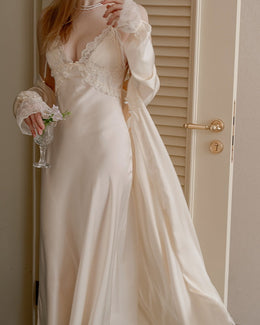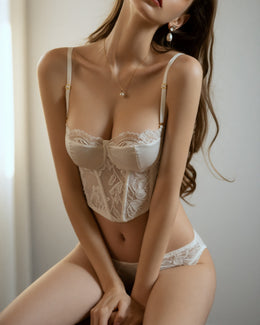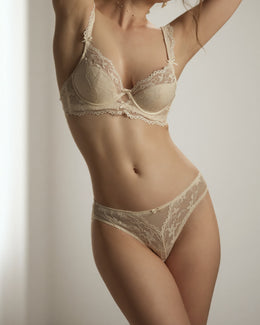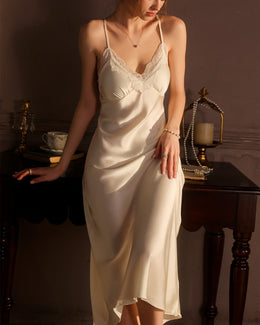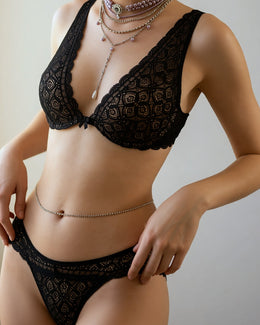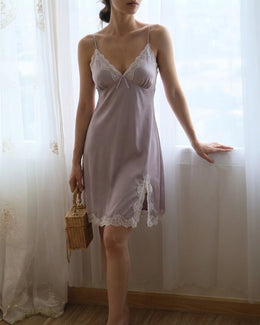



A bandeau is a band with no straps and no cups. A bralette has straps and shaped cups but no rigid wire. A bustier runs from cup to waist with boning and a multi-row back. They are three different answers to where support comes from: compression, band tension, or structure.
Sold side by side they look like three levels of the same thing. They are not. Each one holds you a different way, and knowing which mechanism you are buying tells you immediately whether it will work on you.
The Three, By Structure
| Bandeau | Bralette | Bustier | |
|---|---|---|---|
| Straps | None | Yes, usually adjustable | Often removable |
| Support comes from | Compression across the chest | Band tension plus cup shape | Boning, seams and a wide back |
| Back closure | Usually pull-on | One or two rows of hooks | Three rows, many hooks |
| Best under | Off-shoulder, wide necklines | Everyday clothing, open shirts | Fitted dresses, or worn visibly |
| Fails when | You move, or the bust is fuller | You need lift rather than shape | You want to forget you are wearing it |
| Sized by | S to XL | S to XL, or band and cup | S to XL, or band and cup |
Read down the support row and the whole category makes sense. Compression is the weakest mechanism and the only one available without straps, which is why a bandeau has to be tight to do anything, and why tight is the exact complaint people have about them.
Where the Support Actually Comes From
In a bralette, the band does most of the work. That surprises people who assume straps carry the weight — they do not, and a strap tightened to compensate for a loose band is how shoulders end up sore. The cup then decides shape: a flat triangle of lace spreads, a moulded or 3D-cut cup holds a form, and a soft wire sits between the two.
In a bustier, the load is spread over a much larger area of body. That is the whole design. Boning stops the front panel from folding when you sit or lean, seams direct shape, and a deep multi-row back stops the band riding up under the weight of all that structure. Our After Hours Bustier Set runs velvet-covered boning from cup to waist and closes on a three-row, seven-hook back — those two details are why a bustier can hold without straps when a bandeau cannot.
It is worth saying plainly: a seven-hook back is not luxury, it is load spreading. The more structure the front has, the more back you need to anchor it. If you see a heavily boned piece with a two-hook closure, the maths does not work and it will ride up.
What We Make, and What We Do Not
We do not make a bandeau, and it is a deliberate gap rather than an oversight. A strapless band supports by compression alone, which means it either grips hard enough to be uncomfortable or slides down. There is a narrow band of body types and a narrow band of hours where that trade is worth it, and outside that it is a piece people buy once.
What we make instead, for the same problem, is a halter. The Open Secret Halter Set puts a raised lace panel in front and thin crossed straps across an otherwise open back, with a soft W-frame under the bust doing the lifting and no wire anywhere. It solves what a bandeau is usually bought to solve — a back that needs to show — without relying on grip. It fastens at the front, which is the other thing nobody mentions about strapless pieces: you cannot reach behind you to do them up while holding them in place.
Choosing by Neckline, Not by Category
Open or low back: halter, or covers. Not a bandeau, unless the outfit holds itself up and the bandeau is only there for modesty.
Fitted dress, structured bodice: bustier. The boning follows the same line the dress does, so nothing folds at the waist when you sit.
Everyday, under a shirt or a knit: bralette, and choose the cup by what you want it to do. The Half Truth Half-Cup Set sits low and lifts close with removable straps, which covers most necklines from one piece.
Nothing at all under a thin top: covers rather than a garment. The High Tide Covers are sized rather than one-size and hold through heat and water, which is the case where an adhesive beats a band.
If you are choosing between the soft categories rather than the structured ones, we compared them directly in bralette versus bra, and set out what a bralette is built to do in what is a bralette. Everything is in lingerie sets.
FAQ
What is the difference between a bandeau and a bralette?
Straps and cups. A bandeau is a strapless band with no shaped cups, supporting by compression across the chest. A bralette has straps and shaped cups and supports through band tension. The bralette holds more with less tightness, which is why it stays comfortable for longer.
Is a bustier more supportive than a bralette?
Yes, and for a specific reason. Boning stops the front panel folding, seams direct shape, and a deep multi-row back spreads the load. That combination can hold without straps. A bralette relies on band tension alone, which is lighter to wear but does less.
Can you wear a bustier as a top?
That is one of the things it is built for. Because the structure runs from cup to waist it holds its own shape, so it reads as a garment rather than underwear. Under an open blazer with the lace edge showing is the usual way.
Why do bandeaus keep sliding down?
Because compression is the only thing holding them. Without straps, the band has to grip the ribcage tightly enough to resist gravity and movement at once, and any size that is comfortable is usually a size that slips. A halter or an adhesive cover avoids the trade entirely.
How many hooks should a bustier have?
More than a bra, and the number tracks the structure. A boned piece running to the waist needs a deep back with several rows to stop it riding up, so three rows and six or more hooks is normal. Heavy front structure on a two-hook closure will not stay put.