


What Makes a Bra Hypoallergenic? A Sensitive-Skin Guide
A hypoallergenic-friendly bra minimizes the things that irritate sensitive skin: scratchy unlined fabric, rough seams, and harsh hardware. Look for soft lined cups, a smooth finish against the skin, and a breathable cotton gusset on the matching bottom. No bra can promise zero reaction for everyone, but the right construction makes the day a lot quieter for your skin.
You know the feeling. You take the bra off the second you walk through the door, not because it's late, but because your skin has been asking all day. Let's fix that. Here's what actually matters when your skin is the picky one in the room.
What is a hypoallergenic bra?
A hypoallergenic bra isn't a lab certificate. It's a design choice. The word means "less likely to trigger a reaction," and for a bra that comes down to a handful of practical things: how the fabric meets your skin, how the seams are finished, what the hardware is made of, and whether the bottom breathes. Unlined lace can sit rough against the cup. Thick seams can rub a single spot raw by lunch. Cheap hardware can press or pinch. None of that is your skin being dramatic. It's the bra. When you shop, you're not looking for a magic material. You're looking for a soft, lined cup that stays smooth where it touches you, a clean finish with no scratchy edges, and a cotton gusset on the matching bottom so the most sensitive part of you can breathe. That's the whole idea. Comfort built in, not promised on a tag. Browse our sets with that checklist in mind.
What should you look for instead?
Sensitive skin doesn't need a lecture. It needs a swap. Here's the irritation source on the left, and the thing to reach for on the right.
| Irritation source | What to look for instead |
|---|---|
| Scratchy, unlined fabric on the cup | Soft, lined cups so lace never sits raw against skin |
| Rough, bulky seams that rub one spot | A smooth finish where the bra meets your skin |
| Harsh or pinching hardware | A soft-wire shape that bends and flexes with you |
| A synthetic, non-breathable gusset on the bottom | A breathable cotton gusset on the matching bottom |
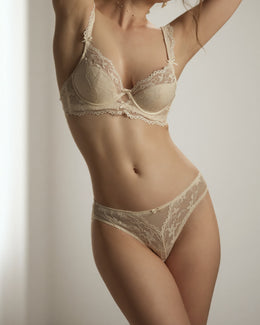
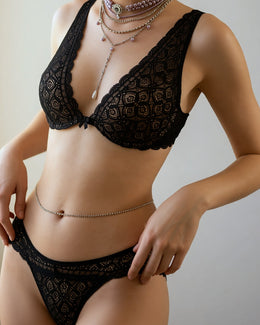
That's the difference between a bra you forget you're wearing and one you can't wait to take off. Our Adele and Capucine sets are built on exactly these choices: lined cups, a soft-wire shape, and a cotton gusset where it counts.
Why does my bra make me itch or break out?
Usually it's friction, heat, or a fabric your skin doesn't get along with, not a flaw in you. Unlined lace drags. Trapped sweat under a non-breathable panel turns into irritation by afternoon. A seam in the wrong place rubs the same patch for eight hours straight. The fix is rarely "size up." It's better contact: a lined cup so the texture never touches you directly, a soft-wire frame that moves instead of digging in, and a cotton gusset on the bottom so heat and moisture have somewhere to go. Fit matters too, because a band that rides up or a cup that gapes creates more rubbing, not less. If you're between sizes or new to D+, start with our fit guide before you blame your skin. Most "my bra hates me" stories are really "my bra fits wrong and breathes worse." Both are fixable.
Is lace bad for sensitive skin?
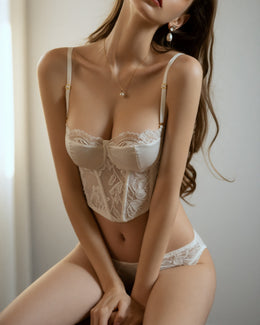
No, not the lace itself. What hurts is unlined lace pressed flat against skin, all that texture with nothing softening it. Lined lace is a different story. When the pretty part faces out and a soft cup faces you, you get the look without the scratch. That's the whole point of how we build. You shouldn't have to choose between something that feels like you and something that feels good. A small dare is still a dare, and it shouldn't come with a rash. Sets like Delphine keep the lace on the outside and the soft against your skin.
FAQ
What is a hypoallergenic bra? It's a bra designed to reduce common irritants rather than a medically certified product. In practice that means soft lined cups so fabric texture stays off your skin, a smooth finish with no rough seams, gentle hardware, and a breathable cotton gusset on the matching bottom. The construction does the work, not a label.
What bra materials are best for sensitive skin? Look at construction more than the material name. The most skin-friendly bras have a lined cup so nothing scratchy sits against you, a smooth interior finish, and a soft-wire shape that bends with your body. On the bottom, a cotton gusset breathes far better than a fully synthetic panel.
Why does my bra make me itch or break out? Most often it's friction and trapped heat, not your skin failing you. Unlined lace rubs, poor fit creates more rubbing, and a non-breathable panel holds moisture all day. Switching to a lined cup, a better fit, and a breathable cotton gusset usually quiets things down. If irritation lasts, check with a clinician too.
What's a cotton gusset and why does it matter? The gusset is the small panel at the crotch of the matching bottom. A cotton one is breathable, so it lets heat and moisture move instead of trapping them against your most sensitive skin. That's a simple, real comfort feature, and it's why we build it into our matching bra-and-thong sets.
Is lace bad for sensitive skin? Not when it's lined. Raw, unlined lace pressed against skin is what causes the scratch, not lace as a whole. With a soft cup behind it, the lace faces out and the comfort faces in. That's how you get the pretty without the itch, which is exactly how our lace sets are built.