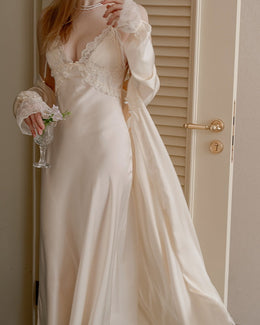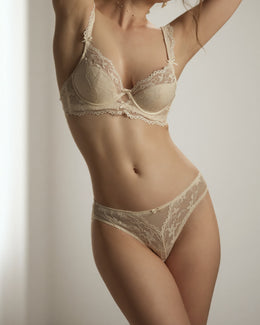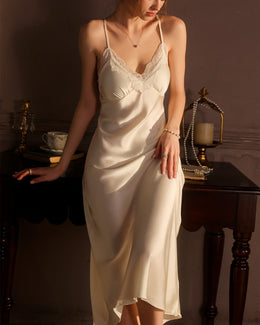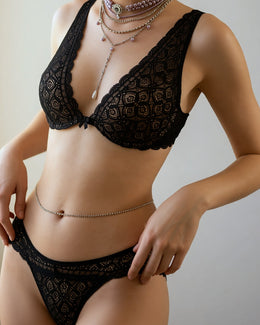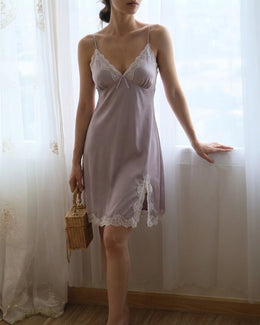



For sleepwear, 19 momme is the sweet spot: heavy enough to fall instead of float, light enough to stay cool. 22 momme suits bedding, where weight is an advantage and drape is not. 25 momme belongs on structured pieces and robes. Heavier is not better — it is simply different work.
Momme (pronounced "mommy", written mm) measures the weight of a fixed area of silk. Higher numbers mean more silk in the same square, which changes opacity, drape, durability and price all at once. The three weights people compare are rarely competing for the same job, which is why "which momme is best" has no single answer.
19 vs 22 vs 25, Side by Side
| 19 momme | 22 momme | 25 momme | |
|---|---|---|---|
| Drape | Falls close to the body, moves | Falls straighter, less movement | Holds its own shape |
| Opacity | Mostly opaque in mid tones, sheer in ivory | Opaque in most colours | Fully opaque |
| Best for | Slips, camisoles, pyjama sets, pillowcases | Sheets, duvet covers, heavier pyjamas | Robes, structured jackets, curtains |
| Feels | Cool and fluid on skin | Cool, with noticeable weight | Substantial, closer to a fine wool |
| Price index | Baseline | Roughly 20–30% more | Often 50%+ more |
| Watch for | Ivory and white read sheer under light | Warm sleepers may find it less breathable | Weight pulls on thin straps |
What Actually Changes as the Number Goes Up
Three things, in this order.
Opacity changes first, and fastest. This is the practical difference most shoppers care about and the one nobody publishes. Going from 16 to 19 momme in a pale colour is the difference between a slip you wear alone and one you do not.
Drape changes second. Lighter silk floats away from the body and catches air; heavier silk falls and stays. Neither is more flattering in the abstract — a bias-cut slip needs weight to fall properly, while a gathered camisole needs lightness or it hangs like a curtain.
Durability changes least. This surprises people. Heavier silk resists snags better, but the things that actually end silk garments are sunlight, alkaline detergent and perspiration, and those attack 25 momme almost as readily as 19. Paying more for weight does not buy you a garment that survives bad washing.
Why We Stopped at 19
We make sleepwear in two weights and neither is 22 or 25, which is a decision worth explaining rather than hiding. The Plain English Silk Slip is sixteen-momme mulberry silk, graded 6A — deliberately light, for a slip that has to disappear under clothing. Almost everything else, from the Real Thing Silk Slip to the Long Weekend Silk Set, is nineteen momme, which is the weight where silk stops floating and starts falling. Above that, for a garment worn against skin in bed, you gain weight and lose the coolness that is the entire reason to sleep in silk. 22 and 25 momme earn their keep in bedding and outerwear, where nobody is lying under them all night. Our Night Shift Silk Pillowcase is nineteen momme on the sleeping side only — silk where your face is, a plain backing where it is not, because the second side changes the price and nothing else.
The Number Is Only Half the Label
Momme tells you weight. It tells you nothing about whether the fibre is mulberry silk, what grade it is, or how tightly it is woven. A 25-momme piece of low-grade silk with short fibres will pill and dull faster than a 19-momme 6A piece, because 6A refers to the length and evenness of the filament, which is what determines surface smoothness over time.
So read the two together. A listing that publishes momme and grade is telling you what it is made of. A listing that publishes neither, and leans on words like "luxury silk-feel" or "satin silk", is usually describing polyester satin. That distinction is worked through in how to tell if silk is real.
Matching Weight to What You Are Buying
A slip to wear under clothes: 16 momme. You want it invisible, not substantial.
A slip or set to sleep in: 19 momme. Enough weight to drape and stay opaque, still cool all night.
A pillowcase: 19 to 22 momme. Below 19 it wears through at the fold; above 22 you are paying for weight your face cannot detect.
Sheets: 22 momme. This is where the extra durability genuinely pays, because sheets take abrasion from every direction.
A robe: 22 to 25 momme. Weight is the point — it is what makes a robe hang instead of cling.
If you are choosing your first piece rather than your third, the fuller explanation of the unit is in what momme actually measures, and the range itself is in the silk edit.
FAQ
Is 22 momme silk better than 19 momme?
Better for bedding, not for sleepwear. 22 momme is more durable against abrasion, which sheets need, but the extra weight reduces the cool, fluid feel that makes silk worth sleeping in. For slips and pyjamas, 19 momme is the weight most silk sleepwear is made in for good reason.
What momme is best for silk pyjamas?
19 momme. It is opaque enough in most colours, heavy enough to fall properly rather than float, and light enough to stay cool through the night. 16 momme suits slips worn under clothing, and anything above 22 starts to feel warm against skin.
Is 25 momme silk worth the extra cost?
For robes, curtains and structured pieces, yes, because the weight creates the hang. For anything worn against skin in bed, you are paying more for a warmer, less fluid garment. Weight also pulls on fine straps, which is a real failure point.
Does higher momme mean better quality silk?
No. Momme measures weight only. Grade — 6A being the longest and most even filament — determines smoothness and how the surface holds up. A 19-momme 6A silk will outlast a heavier piece made from shorter, less even fibre.
Which momme is most opaque?
Opacity rises with weight, but colour matters as much. A 19-momme silk in a mid tone is opaque; the same weight in ivory or white reads sheer under direct light. If opacity is your priority, choose a deeper colour before you chase a higher number.